In April 2025, Smartproxy underwent a complete rebranding and is now called Decodo. The name change didn't alter the product's essence. Decodo remains a popular residential proxy provider with a large IP address pool. However, many users have started looking for alternatives. The main reasons are related to expiring traffic with the subscription model, insufficient flexibility in settings, and rising prices when scaling projects.
Working with arbitrage teams and SEO agencies over the past three years has shown the real picture. Hundreds of specialists note the same problems in their feedback. Most mention one issue. Buying 25GB from providers like Decodo while using only 15GB per month leads to losing the remaining 10GB. They simply expire. This seriously hits the budget, especially when working with seasonal campaigns or testing new funnels.
In this article, we'll review eight worthy Decodo alternatives. Each service was evaluated by criteria that truly matter in work. IP address quality, pricing model, technical support, and real protection from bans on platforms.

Contents
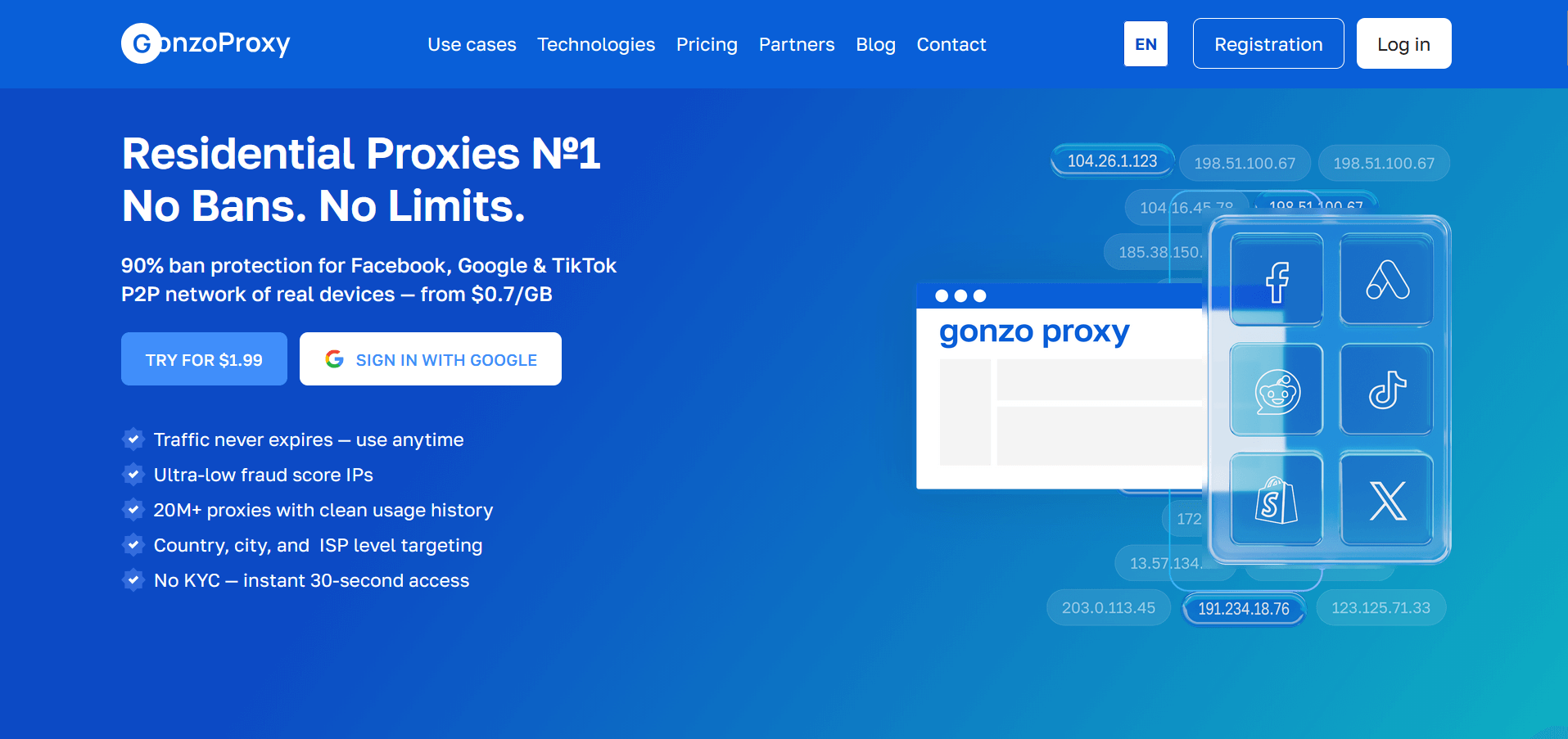
GonzoProxy has been in the proxy market for three years and has collected over 300 reviews on independent platforms. The main difference from Decodo lies in a unique pricing model. You buy traffic once, and it never expires. Buying 50GB in January with 20GB used means the remaining 30GB stays on your balance and waits for its time.
The service is built on a P2P network of 20+ million real user devices worldwide. These aren't server IPs from data centers, but genuine home connections with natural usage history. Tests showed that the fraud score of such addresses stays below 0.1%, which is critical for working with Facebook Ads and Google Ads.
Residential proxies are suitable for
- Traffic arbitrage. One of the clients runs gambling offers through Google Ads. After switching to GonzoProxy, the number of checkpoints dropped by 87%. The secret is that you can choose a specific provider (Comcast, AT&T, Vodafone). This is a free option that competitors charge extra for.
- Account farming. Creating an unlimited number of proxies through the control panel or API is available without restrictions. The "1 proxy = 1 account" scheme works perfectly. You only pay for used traffic, not for the number of created proxies. A team of five people manages over 200 Reddit accounts. This approach saves approximately $340 every month compared to subscription models from other providers.
- Data parsing. The system automatically filters out slow IPs and replaces problematic addresses without user involvement. Sticky sessions last up to 7 days, which is convenient for long-term data collection tasks from protected platforms.
Advantages
- Traffic doesn't expire. The only provider with unlimited storage of gigabytes
- 90% protection from bans on Facebook, Google, TikTok thanks to real IPs with clean history
- Free targeting down to city and provider (others have this as a paid option)
- No KYC. Registration in 30 seconds via Google
- Telegram support responds in 5 minutes, not through a ticket system
- GonzoProxy LTD is officially registered in the United Kingdom
Disadvantages
- Mobile proxies are currently only available for Ukraine and Poland
- No data center proxies if you need maximum speed for simple tasks
Prices start from $6.5 per 1GB with progressive discounts. The more you buy, the cheaper per gigabyte. At 5000+ GB volume, the price drops to $2.0/GB. Important point. With each top-up, the unused traffic balance is added to the new package.
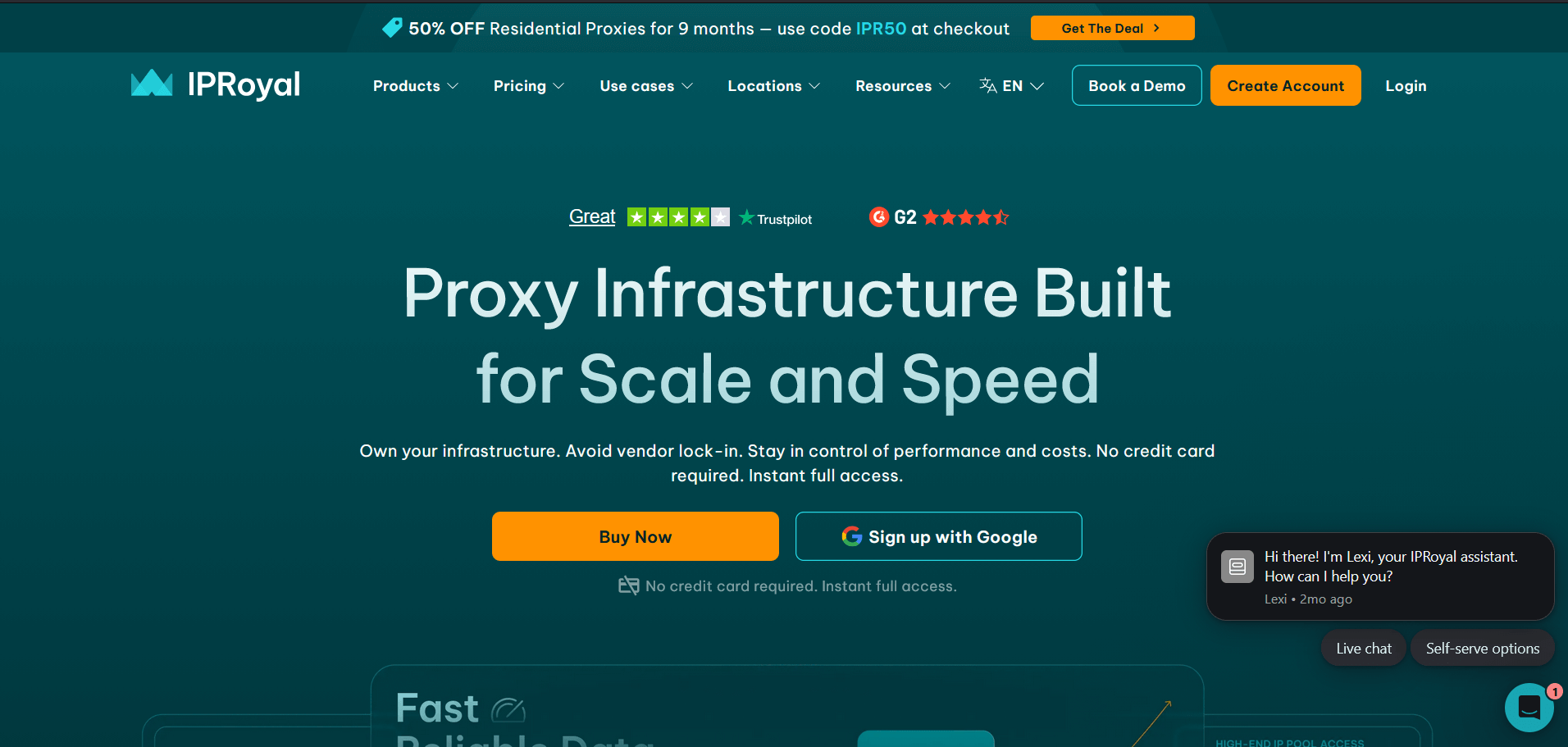
IPRoyal offers three types of proxies. Residential, data center, and mobile. The service is based in Lithuania and has been operating since 2020. The pool consists of about 8 million IP addresses in 195 countries.
IPRoyal's feature lies in the Pawns program, through which they collect residential IPs. Users install an application and receive payment for providing their internet channel. The model is similar to P2P networks, but the scale is significantly smaller.
Residential proxies are suitable for
- Managing advertising accounts
- Web scraping with basic protection from blocking
- Social media automation
Pros
- Free tier with 1GB traffic for testing
- Support for HTTP, HTTPS, SOCKS5 protocols
- Relatively low prices from $1.75/GB
Cons
- Traffic expires monthly with subscription
- Smaller IP pool compared to top providers
- Support works slower. Average response time 2-3 hours
- Sticky sessions only up to 10 minutes
One arbitrageur talked about a problem. Buying 25GB with 18GB used over three weeks led to losing the remaining 7GB at the end of the month. They simply expired. With repeated purchases, this becomes unprofitable.
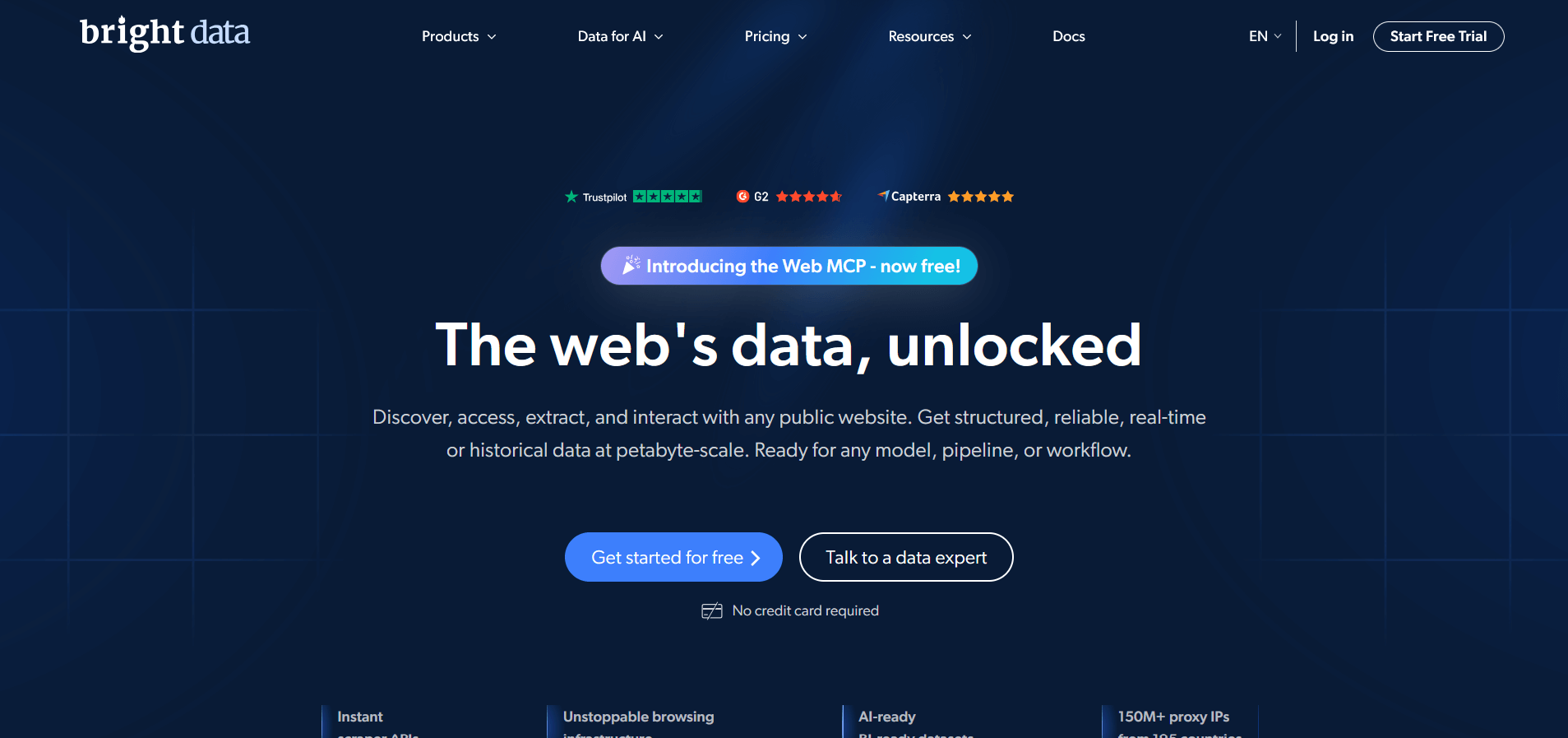
Bright Data was formerly called Luminati. This provider is among the largest market players. The pool has over 72 million IP addresses. The company has been operating since 2014. Focus is directed at the corporate segment. The infrastructure is truly impressive, though prices are at a corresponding level.
The service collects IPs through SDKs embedded in various applications. Essentially, downloading some free programs means agreeing to share part of your internet channel.
Residential proxies are suitable for
- Enterprise parsing of large data volumes
- Market intelligence for large corporations
- Competitive analysis in e-commerce
Pros
- Largest IP address pool on the market
- Advanced targeting settings
- High connection speed
Cons
- Cost from $10.50/GB. One of the highest
- Complex interface with a learning curve
- Mandatory minimum payment of $500
- Subscription model with expiring traffic
- Support through tickets, slow responses
For small teams and solo specialists, Bright Data is excessive. A client from an SEO agency tried their service for parsing Google SERP. Functionality is excellent, but calculating costs over three months showed $2,800. Switching to a more affordable solution saved 60% of the budget without losing quality.
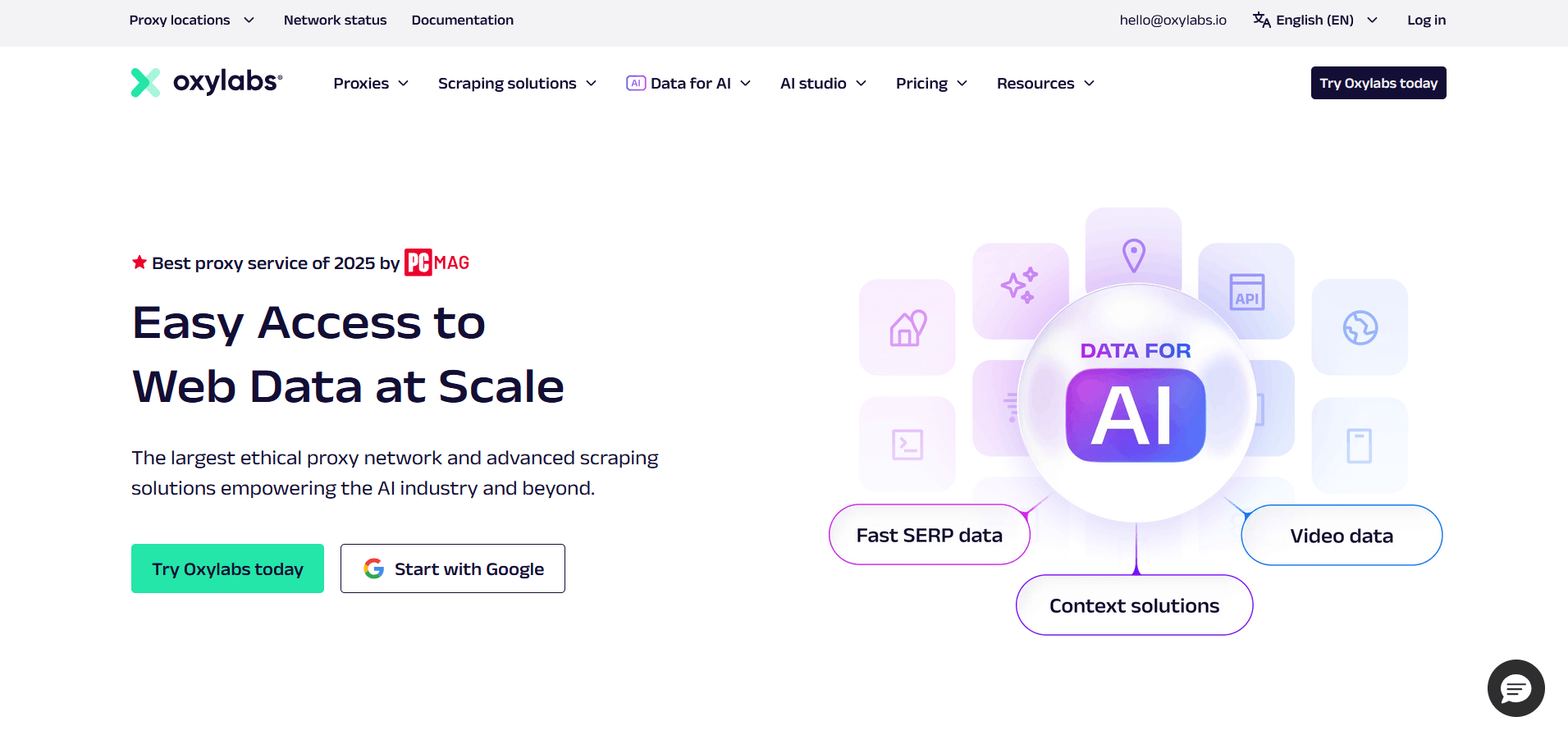
Oxylabs is a Lithuanian provider operating since 2015. Positioning goes as a premium solution for business. Pool of about 100+ million IP addresses, which is impressive on paper.
Oxylabs' main focus is concentrated on large corporations and enterprise clients. This is visible from the price structure and minimum payment requirements.
Residential proxies are suitable for
- Corporate web scraping
- Data collection for machine learning
- Brand reputation monitoring
Pros
- Large IP pool with good country coverage
- 99.95% uptime according to their metrics
- Dedicated account manager for large clients
Cons
- Prices from $15/GB. Unaffordable for small business
- Minimum payment from $300
- Traffic is tied to subscription and expires
- KYC verification is mandatory
- Long onboarding process
A Product Owner from a startup tried to connect Oxylabs for parsing vacancies. The entire process from application to first proxy took four days. Plus corporate documents were required and detailed use case description. For a quick start, this isn't an option.
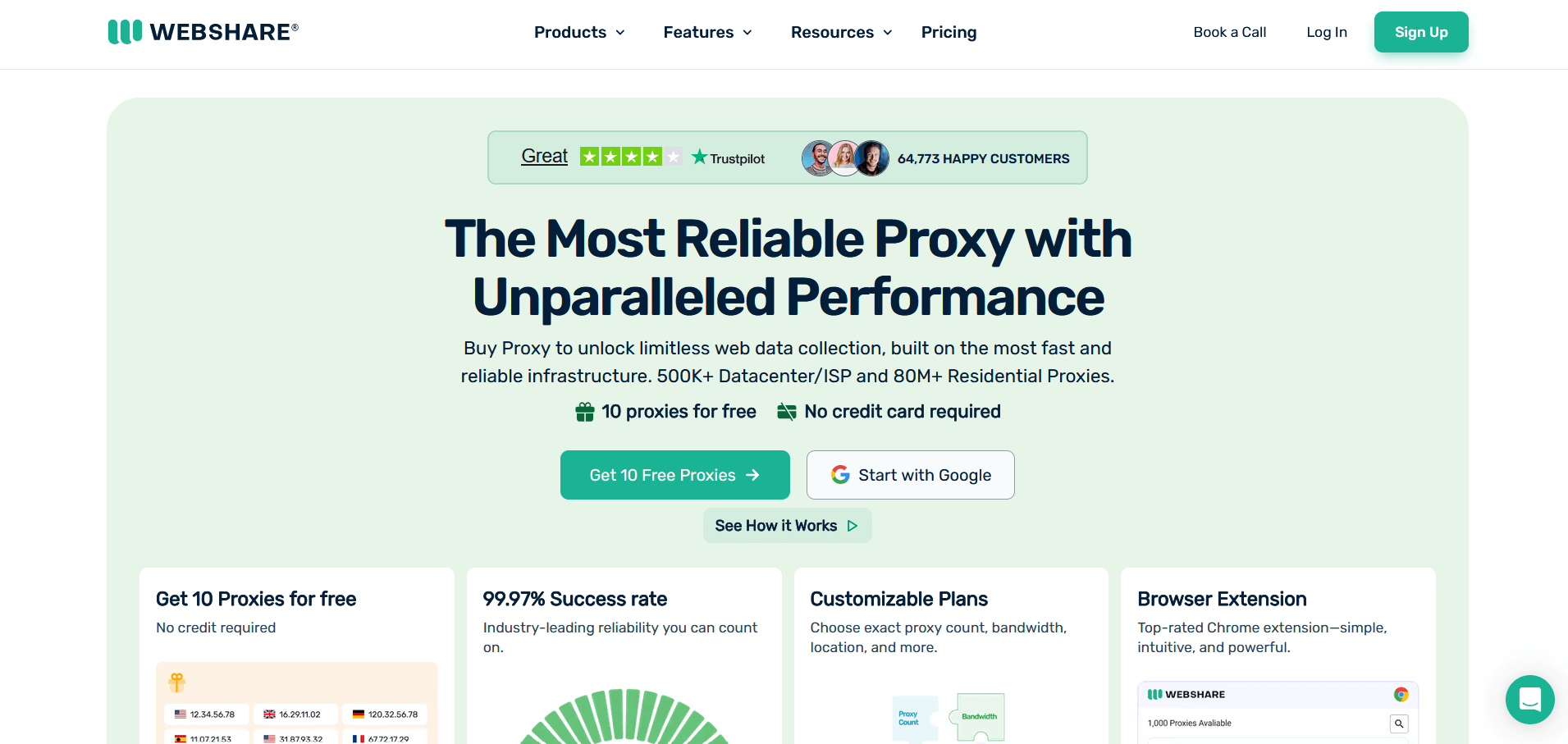
Webshare appeared in 2018 and quickly gained popularity through aggressive pricing. This is a mix of residential and data center proxies with emphasis on ease of use.
The company doesn't disclose the exact size of their pool, which is already concerning. By indirect signs, we're talking about 5-7 million IP addresses.
Residential proxies are suitable for
- Basic web scraping
- Simple automation without high IP quality requirements
- Geo-targeting testing
Pros
- Low prices from $2.99/GB
- Simple interface without extra options
- Quick registration
Cons
- IP quality noticeably below average. High fraud score
- Frequent blocks on serious platforms (Facebook, Google)
- Traffic expires monthly
- Support only through email with up to 24-hour wait
- No specific provider selection
A Social Media Manager tried Webshare for managing Reddit accounts. The result was disappointing. Three bans in two weeks. It turned out that IP addresses are identified by antifraud systems as suspicious. Had to switch to a higher quality provider.
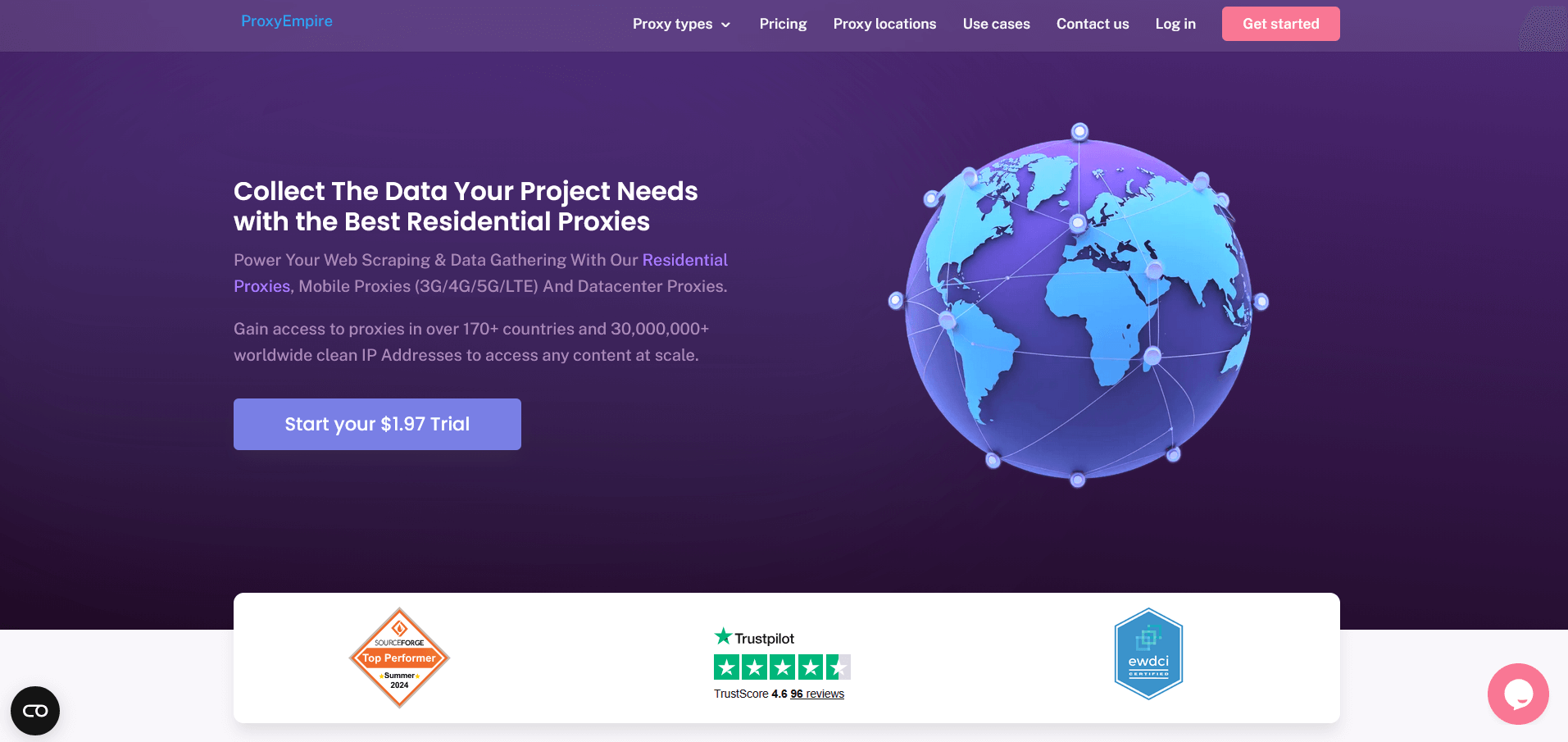
ProxyEmpire has been operating since 2021 and tries to compete with major players through aggressive marketing. They claim 9+ million IPs in the pool.
Their IP collection model is standard. Through SDK in partner applications. They offer nothing fundamentally new.
Residential proxies are suitable for
- Sneaker botting and buying limited goods
- Basic parsing without strict restrictions
- Web application testing
Pros
- Prices from $2.5/GB
- IP rotation on demand or by timer
- API for automation
Cons
- Subscription model with expiring traffic
- Average connection speed
- Sticky sessions up to 30 minutes. Not enough for serious tasks
- Limited geography compared to top providers
A Head of Media Buying Team from an arbitrage team tested ProxyEmpire for Google Ads. The first three days everything worked fine, but then checkpoints started. It turned out that IP addresses were already used by other clients for suspicious activity. They clearly don't control pool cleanliness properly.
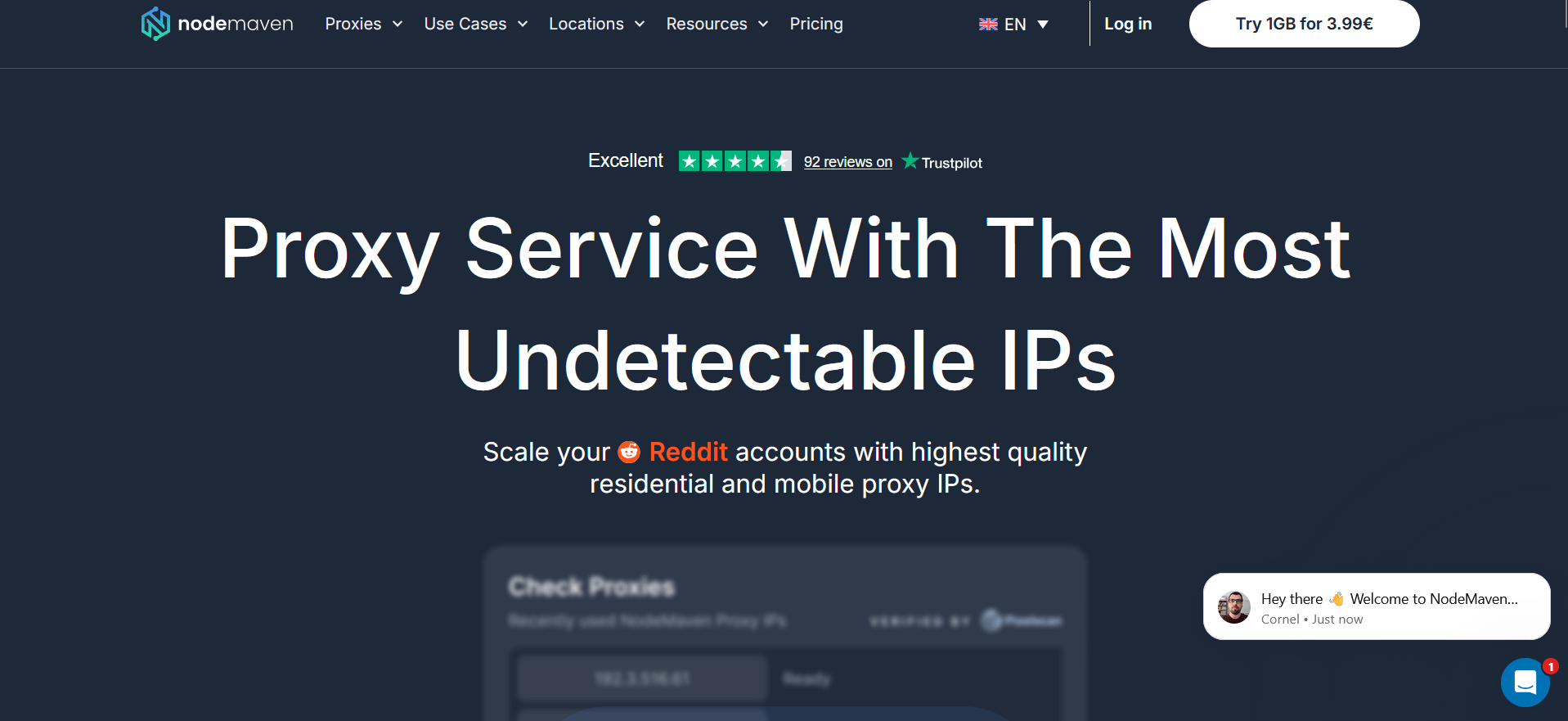
NodeMaven appeared in 2022 and immediately became popular among the crypto community. Focus is made on residential proxies with emphasis on anonymity.
The pool consists of approximately 6 million IP addresses. Geography is decent but loses to market leaders.
Residential proxies are suitable for
- Working with crypto exchanges and DeFi platforms
- Participating in token sales with geo-restrictions
- Airdrop farming
Pros
- Accept cryptocurrency for payment
- Don't require KYC at basic level
- Prices from $3/GB
Cons
- Traffic expires monthly
- Smaller pool compared to competitors
- Support only works during EST business hours
- No detailed provider selection
A Crypto Project Manager shared experience using NodeMaven for Coinlist. The service worked fine, but a problem arose. The purchased 20GB package ran out in 12 days, and the remaining 18 days of the month had to buy traffic at full price. In the end, the overpayment was substantial.
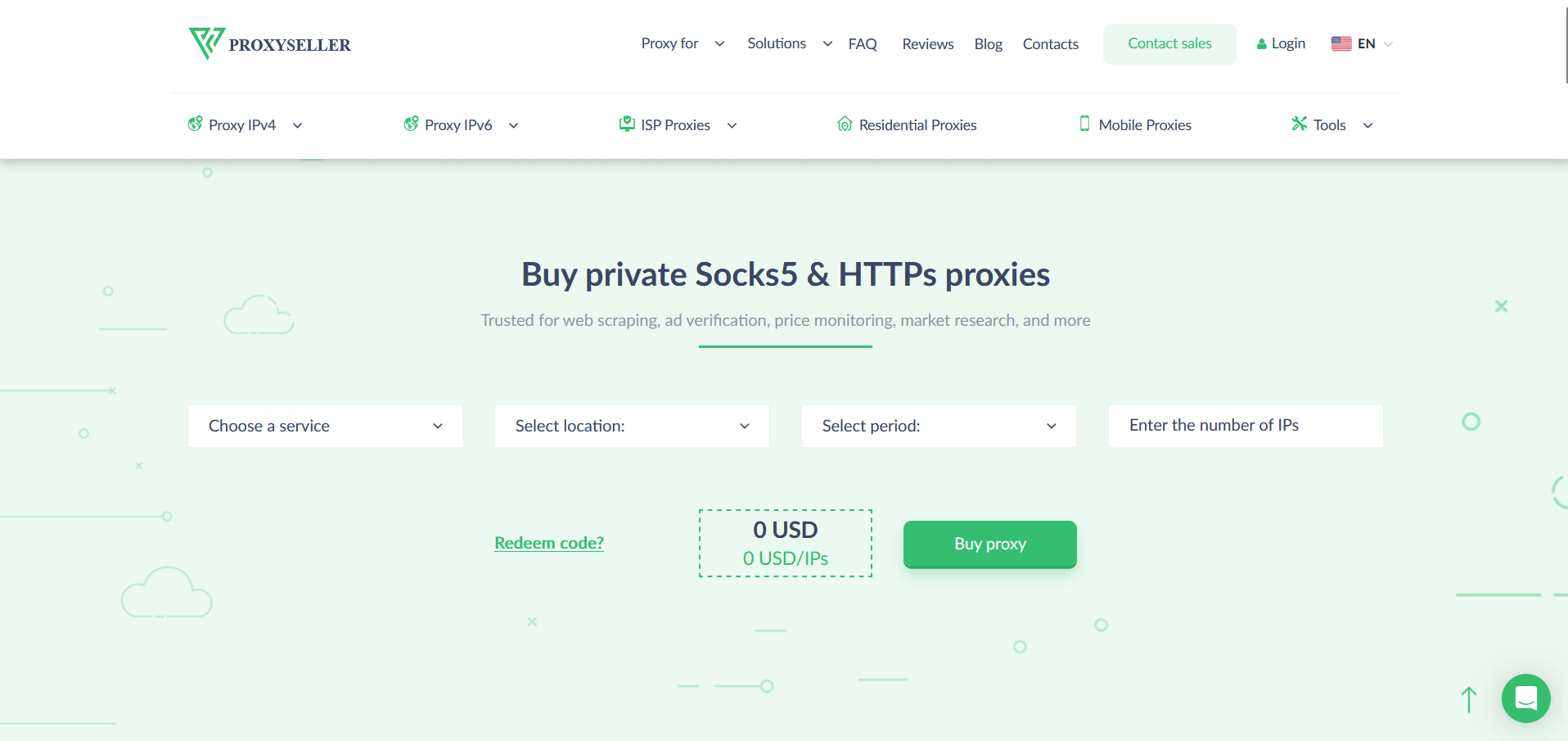
Proxy-Seller is a Russian provider operating since 2011. One of the market veterans, specialization goes to IPv4 and IPv6 proxies.
They have a different model. Not residential proxies from real devices, but dedicated IP addresses from data centers. For certain tasks this works, but quality is noticeably lower.
Data center proxies are suitable for
- Simple tasks without high IP quality requirements
- Mass parsing with low priority
- Automation where address cleanliness isn't critical
Pros
- Low prices from $0.5 per proxy
- Long operating history in the market
- Support in Russian language
Cons
- These are NOT residential proxies. Only data center IPs
- High fraud score, frequent blocks
- Subscription model with fixed terms
- Not suitable for serious arbitrage and SMM
An SEO Specialist tried using Proxy-Seller for collecting Google SERP data. Google quickly recognized data center IPs and started issuing captchas on every third request. For quality parsing, this isn't a solution.
StormProxies has been operating since 2016 and positions itself as a budget option for beginners. Exact pool size isn't disclosed, estimated at about 3-4 million addresses.
They have a mixed model. Both residential and data center proxies. IP address quality raises questions among professionals.
Residential proxies are suitable for
- Learning to work with proxies
- Small projects without high requirements
- Experiments and testing
Pros
- Low prices from $50 for 50GB
- Simple setup without complex parameters
- Quick registration
Cons
- Low IP quality with high fraud score
- Traffic expires monthly
- Frequent connection drops
- Support works slowly
- Sticky sessions only 3 minutes
A Market Research Analyst tested StormProxies for monitoring e-commerce platform prices. Half the requests didn't go through due to blocks. It turned out IP addresses were actively used by other clients for suspicious activity and ended up in blacklists.
- The main difference between services lies in the pricing model. GonzoProxy remains the only provider with unlimited traffic storage. All others use subscriptions with monthly expiration of unused gigabytes. For a team working with variable load, the cost difference reaches 40-50% per year.
- The second important factor concerns IP address quality. Real devices from P2P networks (GonzoProxy) show fraud scores below 0.1%. Data center proxies (Proxy-Seller, partially StormProxies) give indicators above 1%. The difference is critical for platforms with strict moderation.
The third parameter relates to technical support. GonzoProxy responds in Telegram within 5 minutes. Bright Data and Oxylabs work through ticket systems with 4-6 hour waits. For urgent problems during active campaigns, this can cost money.
Choosing a Decodo alternative depends on your tasks and budget. If work involves Facebook Ads, Google Ads, or any platforms with strict moderation, IP quality is critical. Saving $200 on proxies can lead to losing an account with $5,000 invested. The math is simple.
GonzoProxy solves the main pain point that Decodo and all other competitors have. Expiring traffic. You buy gigabytes once and use them when convenient. No deadlines, no losses, no overpayments. For a team working with seasonal campaigns or testing new funnels, this saves 30% to 50% of proxy budget.
Plus the ability to create unlimited proxies for free. You only pay for used traffic. The "1 proxy = 1 account" scheme works perfectly for multi-accounting and farming. Clients manage hundreds of accounts through API without extra hassle.
Telegram support responds within 5 minutes. No need to fill out forms, wait for responses for days, and explain the problem three times to different specialists. Getting a solution happens quickly with work continuation.
Check out GonzoProxy pricing plans or register right now. Promo code START15 gives a 15% discount on first purchase. No KYC, no waiting, no unnecessary questions. Access in 30 seconds through Google account.
![Top 10 Geosurf Alternatives and Competitors [2026]](/assets/696a47ea854a36d67efb9776_16.%20geosurf.webp)